- Author Alishba Khan
- Published on
Dot Republic Media Moves Into AI Video Production, Starting With Its First AI-Generated Short Film
Dot Republic Media (DRM) has just released its first AI-generated video, and it’s less a one-off experiment than a signal of where the studio is headed. For a company built on localization, dubbing, and adaptation, stepping into AI video production is a genuine shift in how DRM plans to make content, not just distribute it.
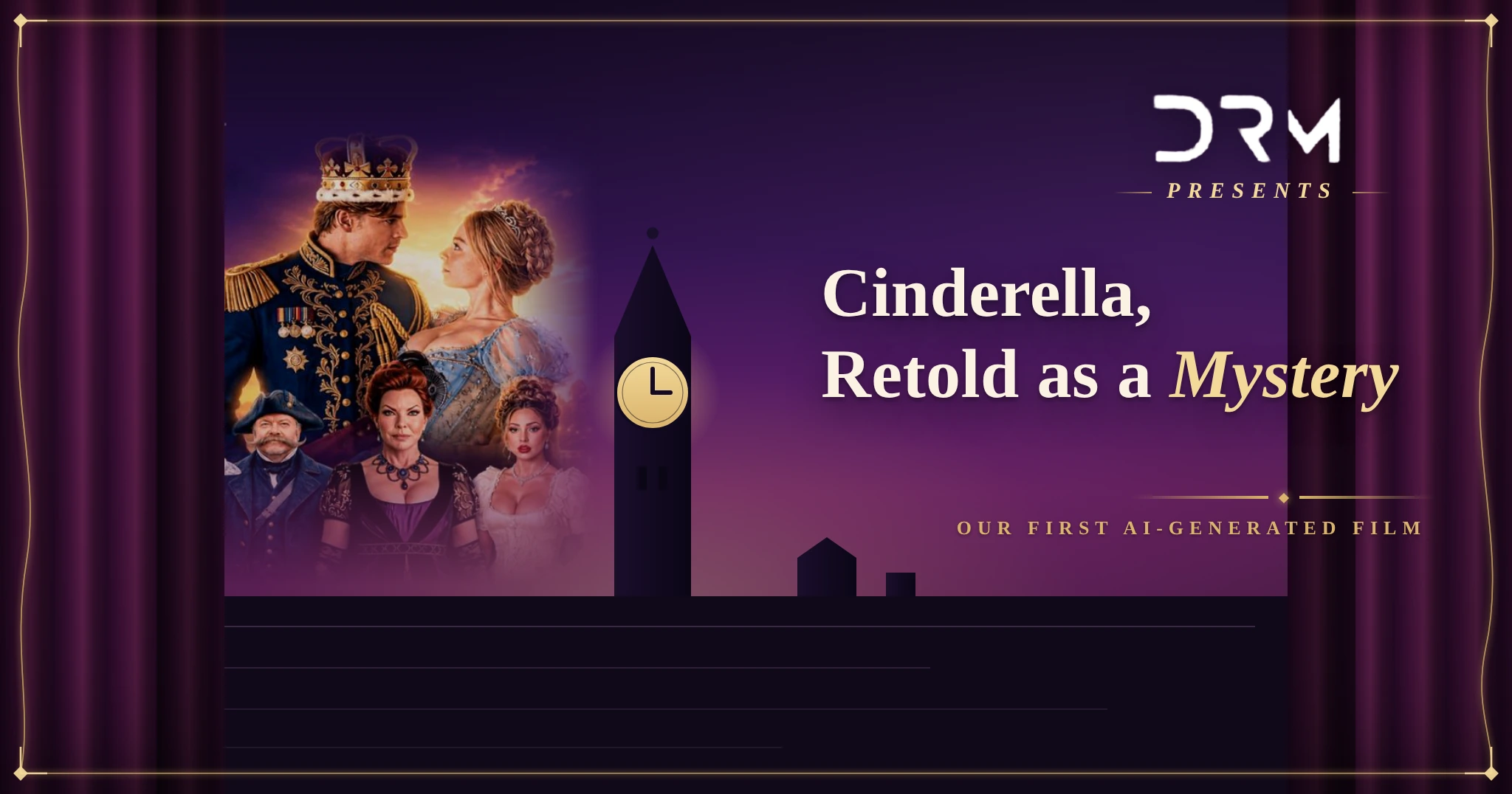
The short film itself, a mystery riff on Cinderella, is the proof of concept. The bigger story is what it represents: DRM building an in-house AI filmmaking pipeline from scratch, and treating this release as the first entry in an ongoing line of AI production experiments.
Building an AI production workflow from the ground up
Releasing a coherent AI-generated short film meant DRM couldn’t just prompt a tool and publish the result. The team had to build a production process around AI tools the same way a studio would build one around cameras and editing suites, just with different equipment. That meant developing new internal skills across a few key areas:
- Scripting for AI generation. Writing for an AI-generated production means anticipating how prompts translate into performance, timing, and tone, not just plot. That’s a different discipline than writing for a live-action shoot.
- Directing without a physical set. Every scene, from blocking to camera framing, had to be described and iterated through prompts rather than adjusted live on the day. It’s a genuinely different creative muscle than briefing a crew.
- Editing AI-generated footage for rhythm. Even with fully AI-generated shots, pacing, cuts, and timing still make or break the final product. That part of the craft carries over from traditional production, even when the source material doesn’t.
Building this workflow is really the point of the release. The short film is the output; the pipeline behind it is the asset DRM is actually investing in.
Part of a longer-term AI content strategy
DRM is framing this as the first in an ongoing series, not a standalone project. The plan is to keep producing AI-generated content, different stories, tones, and techniques, and to use audience response to shape what gets tried next. That’s a deliberate approach: rather than committing to one methodology, DRM wants to stay adaptable while the AI video production landscape keeps shifting.
That pace is part of the reasoning. AI-generated video tooling is evolving quickly, and DRM would rather be building internal expertise now, while techniques are still being figured out, than trying to catch up later once the format matures. Each new release functions as both content and a data point, informing how the studio refines its AI production process going forward.
For DRM, this also extends the company’s core value proposition. Where localization and dubbing helped other studios’ content travel across markets, AI video production gives DRM a way to originate content of its own, using many of the same instincts around pacing, tone, and audience read that its localization work has sharpened over the years.
What comes next
DRM has been clear that this is early-stage work, and that more AI-generated releases are coming, each one testing a different story or technique as the studio builds out its AI production capabilities. The first release, a mystery-tinged take on Cinderella, is live now, and DRM is treating audience reactions as a direct input into what gets made next.
Watch DRM’s first AI-generated short film, “Cinderella: A Mystery Retold,” on YouTube, and share what worked and what didn’t. For a studio building out a new AI video production pipeline in public, that feedback is the clearest signal it has for where to take the next one.
#AIVideoProduction #AIGeneratedContent #GenerativeAI #DRMOriginals #StudioNews #YouTube #DRM
- AI filmmaking, AI video production, AI-generated short film, AI-generated video, dot republic media, DRM, generative AI content studio, youtube, youtubechannel, youtubevideos